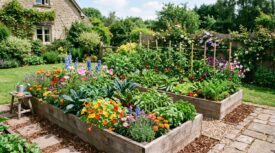
If you’re hoping to add some life and color to your outdoor space, mixing flowers and vegetables in the same garden can be extremely rewarding. I’ve tried this out in my own yard, and it feels like getting the best of both worlds: beautiful blooms to enjoy, plus a steady stream of fresh veggies. Even if you’re new to gardening, creating a combined flower and vegetable garden isn’t tricky, and the benefits go beyond just looks. I’m laying out everything you need to create a garden that’s as good for pollinators as it is for your table.
Why Combine Flowers and Vegetables?
Planting flowers and vegetables together isn’t only about saving space, though it definitely helps if you have a small yard. Blending both types of plants in one bed creates garden beds that buzz with energy and attract helpful insects throughout the season. Many gardeners report fewer pest problems and more pollinated veggies, thanks to all those bees and butterflies the blooms bring in.
Historical records show this mixed planting style isn’t anything new. Cottage gardens in Europe, for example, often packed veggies, herbs, and flowers closely together for beauty and productivity. Today, it’s catching on with everyone from urban gardeners to people with bigger suburban spaces.
I find this approach makes gardens more resilient to pests. For instance, planting marigolds near tomatoes has helped reduce annoying tomato hornworms in my own raised beds. These experiences show how blending can improve both looks and harvests. Plus, the variety gives you a dynamic and ever-changing landscape to enjoy through the year.
Getting Started: Planning a Mixed Garden
The secret to a successful combined garden is picking the right plants and arranging them so they all have room to grow. Sketch out your space before digging in the first trowel. Think about sunny spots, areas that stay pretty damp, and where you’ll want the most color or interest through the season. A good layout upfront means less fuss later.
- Sunlight: Most veggies and many annual flowers need full sun, which means at least 6 hours each day.
- Soil Prep: Healthy, welldraining soil is important. Adding compost will help both flowers and veggies get off to a strong start.
- Spacing: Don’t crowd plants. Leave enough space for veggies to grow without shading out flowering buddies.
- Watering: Group plants with similar water needs together, so no one ends up soggy or parched.
When mapping out your plot, try to factor in height, color compatibility, and root depth, so you don’t run into surprises as everything fills in later. Label your plan to reference when planting time rolls around.
Good Flower Choices for Vegetable Gardens
Certain flowers play especially well with veggies. Some attract pollinators, while others help keep pests in check or even improve growth of nearby plants. Here are a few I always try to squeeze into my vegetable beds:
- Marigolds: These bright flowers don’t just look nice. They’re known to help repel nematodes and some flying pests.
- Calendula: Sometimes called pot marigold, this bloom attracts loads of beneficial insects, like hoverflies.
- Nasturtiums: Easy to grow, nasturtiums can outcompete weeds and draw aphids away from crops you want to protect.
- Sunflowers: They add height, bring birds, and can act as a living trellis for climbing beans.
- Zinnias and cosmos: Bees and butterflies love them, and they keep the garden cheerful through the hot days of summer.
Adding flowers isn’t only about beauty. For example, nasturtiums are edible and provide a peppery punch in salads or as a garnish, while sunflowers can bring shade and even windbreak benefits to delicate seedlings. Lavender, though it likes drier soil, can draw in pollinators and is often a fragrant, calming addition at garden edges.
Vegetables That Mix Well With Flowers
Just about any veggie can share space with flowers, but some are easier to tuck into borders or beds. Leafy greens like lettuce and kale look great among annual blooms, while trailing squash or compact bush beans can nestle in at the feet of taller flowers. Tomatoes, peppers, and eggplants all do well surrounded by a flower border, especially if you’re growing to attract pollinators. Radishes and carrots work fine in small pockets between flowers, and their quick growth can fill early-season gaps before summer’s big blooms really show off.
How to Combine Flowers and Vegetables
Mixing things up doesn’t mean just tossing everything together. Thoughtful placement helps each plant thrive. Here’s how I usually arrange my beds for the best results:
- Rows or Blocks: Alternate strips of flowers and veggies, or mix in patches of each for a fuller, more relaxed look.
- Companion Planting: Place pestrepelling flowers, like marigolds or nasturtiums, right next to veggies that need extra protection.
- Height and Layering: Put taller flowers at the back or center (if you’ve got a round bed), and keep lower veggies and blooms at the front or edges.
- Pathways: Adding stepping stones or mulch paths makes it easier to reach both veggies and flowers for picking and pruning.
Try grouping plants by their growth speed. For example, fast growers like radishes or lettuce can be sown alongside slower blooming flowers so you have continuous color and harvest activities throughout the season.
Pest Control and Pollinator Benefits
The right flowervegetable combos can really help cut down on garden headaches. I’ve noticed fewer squash bugs after surrounding my zucchini with nasturtiums and calendula. The science backs this up, as many flowers release scents or provide habitats that attract insects like ladybugs and lacewings, who snack on the bugs that threaten crops.
Pollinatorattracting flowers, like cosmos and sunflowers, give a boost to yields on crops that need bees to fruit (tomatoes and squash especially). A bed buzzing with bees is usually a sign you’ll get a great harvest. This keeps the whole garden lively and increases your chances for a successful picking every time you head out.
Common Mistakes to Avoid
- Overcrowding: Packing too many plants together makes for weak, scraggly growth and more chances for disease. Always check seed packets for mature size.
- Mismatched Sun Needs: Some flowers love shade, while others need sun. Pair them with veggies that need similar light.
- Poor Soil: Don’t forget to improve your soil before planting. Veggies and flowers both like compostricher, loose earth.
- Ignoring Watering Needs: Some flowers (like lavender) hate wet roots, while lettuce and cucumbers need plenty of moisture. Group accordingly so everyone is happy as the summer heats up.
Tips for a Beautiful and Productive Garden
I’ve picked up a few tricks that make these mixed gardens thrive year after year. Mulching helps retain moisture, suppress weeds, and makes both flowers and veggies happy. Mulch also looks tidy and blends everything together. I start seeds of certain flowers (like zinnias or marigolds) indoors to have strong, healthy plants ready to pop into the veggie garden come spring.
Rotating crops and switching up flower locations every year stops pests and diseases from getting settled in. Consider using edible flowers, like nasturtiums and calendula, for both beauty and flavor. And, don’t be shy about adding herbs—basil, dill, and chives often help with pest control and look awesome among the blooms.
If you want to take your design up a notch, sketch out color themes for blooms that will accent your favorite vegetables. For example, purple pansies around green lettuce or bright yellow marigolds setting off tomato vines. Adding odd-numbered groups of flowers and staggering planting times creates continuous interest and helps fill empty spaces as different plants peak.
Frequently Asked Questions
Question: Will flowers and vegetables compete for nutrients?
Answer: As long as you give them enough space and keep your soil healthy with regular compost or fertilizer, most flowers and veggies grow happily together. Keep an eye on water and feed more often during hot spells or peak growth.
Question: Do any flowers actually harm veggies?
Answer: Most common annual flowers are safe for veggies, but some perennials like morning glories or mint can be invasive and take over. Check plant tags or ask at your local garden center if you’re unsure.
Question: How do I keep things looking good all season?
Answer: Mix early, mid, and late season bloomers so your garden never looks dull. If something dies back, fill the space with a quickgrowing crop or more annuals.
My Favorite Mixed Garden Combos
- Tomatoes + Basil + Marigolds: Classic trio that tastes good and looks great. Marigolds can help repel pests, and basil boosts tomato flavor.
- Cucumbers + Nasturtiums: Nasturtiums tumble around cucumber vines, adding color and deterring cucumber beetles.
- Lettuce + Pansies: Edges of beds with frilly lettuce and cute pansy blooms look good and provide lots to snack on.
Combining flowers with veggies isn’t just about making your garden pretty, although that’s a big plus. The real value comes from a healthier, more vibrant outdoor space and more productive harvests. I’ve lost count of how many times neighbors stop to ask how I get everything to grow so well together. With a little planning and some smart choices, you’ll be enjoying bouquets and salads out of the same patch of dirt in no time. Don’t be afraid to try something new each season and see what works best for your space; gardening is about experimenting and watching your outdoor world come to life.