
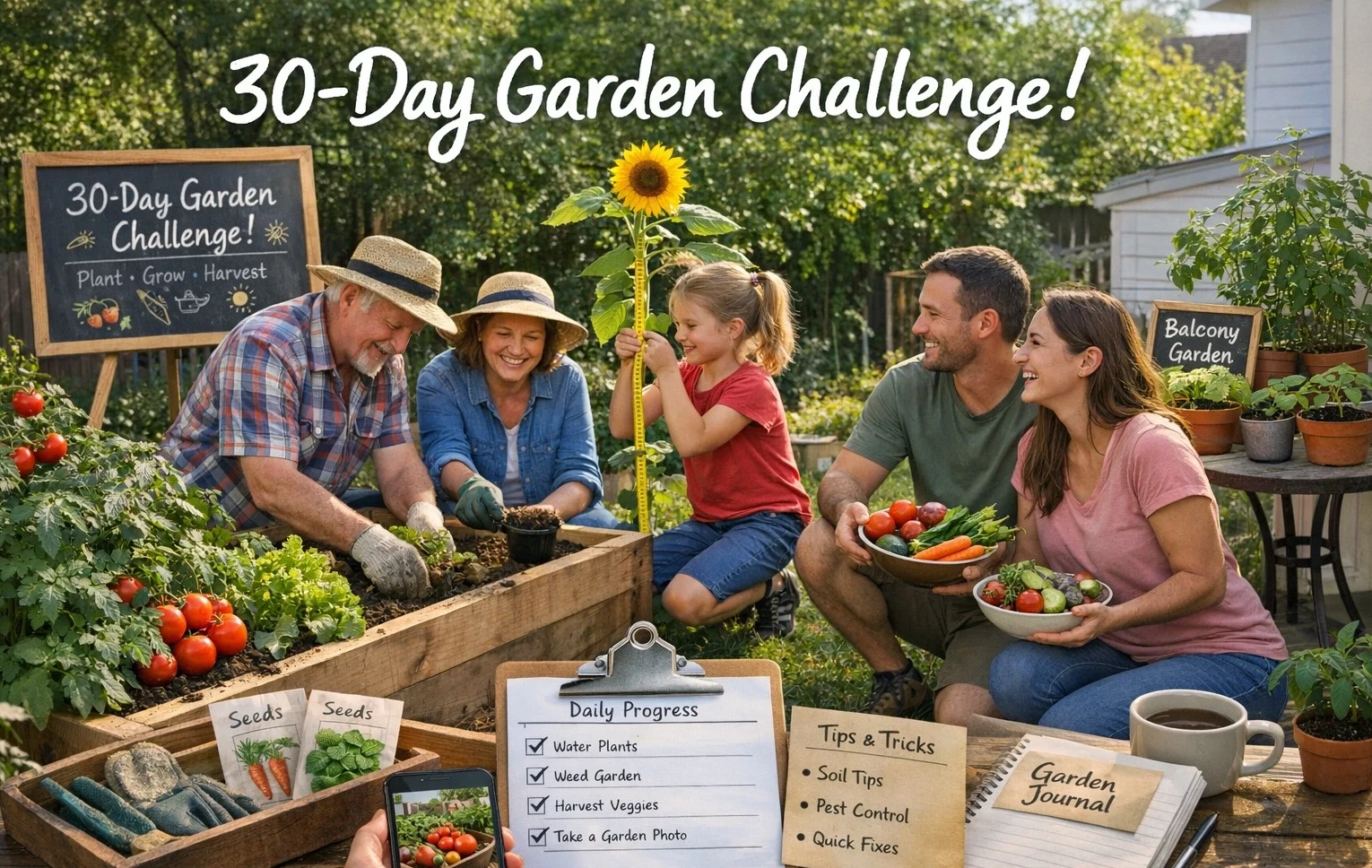
Jumping into a one month challenge in the garden together adds a little excitement to regular days and brings homegrown veggies, fresh air, and a good reason to connect with other people. After doing this challenge with my friends and family, I found it’s a super practical way to stay active, keep spirits high, and even get a few new favorite recipes. I’ve run this on balconies and tiny backyards—you really don’t need anything fancy, just a willingness to get your hands dirty. Even if you’ve never gardened before, setting up a 30-day shared experiment can be surprisingly doable and pretty fun.
Planning Your Month: Tools, Space, and the People Involved
You don’t have to be a plant expert, and you don’t need a big space to get started. For our family’s challenge, we used windowsill planters and some old buckets out back. The key is picking what works for your space and group, not aiming for perfection. Here’s my practical checklist to kick things off:
- Containers: planters, old pots, buckets, or any empty food tubs you have lying around
- Soil or potting mix: pick up a bag or dig up a small patch in your yard
- Seeds or starter plants: herbs, radishes, lettuce, or fastgrowing flowers are easy wins
- Watering can or even a heavy cup for easy soaking
- Trowel or large spoon (just for scooping and digging)
- Gardening gloves (optional, not required for most folks)
Getting everyone in your challenge to pick one plant each adds a little friendly rivalry. My goto is usually mint because it’s hard to mess up and you can toss it in drinks or salads. Someone else might want tomatoes, sunflowers, or even strawberries for a stretch goal.
Week 1: Getting Started & Building Simple Habits
Day 1: Choose Your Quick Win Crops
Starting out with easygrowers can keep you motivated and show progress pretty quick. I always recommend starting with radishes, lettuce, basil, marigolds, or green onions. They pop up fast and don’t need much fussing over. Labeling your pots or patch with everyone’s name or plant adds a playful, team feeling.
Day 3: Nature’s Mental Reset
Getting your hands into the dirt has a way of clearing your mind. The simple act of watering or poking around the leaves can take your brain off daily worries. After a tough day, I find a little time with the plants helps switch up my mood for the better, even if all I’m doing is clearing off a few dead leaves or watching how fast the sprouts are coming in.
Day 5: Soil Smarts for Newbies
If the soil looks chunky or super dry, some compost or even used coffee grounds can help. I usually just loosen up the top layer with a spoon each week. Keep the soil slightly moist (not soggy) by feeling it with your finger. Healthy soil makes everything easier; it’s really about not letting the plants dry out between checks.
Day 7: Share Your Progress
Spotting a new leaf or flower? Snap a shot, even if it’s not Instagramready. Sharing photos with the group, or sending them to friends, keeps the energy up. I love seeing how everyone’s pots look totally different, even if we all started with the same seeds.
Action Plan for a 30-Day Group Garden Challenge
- Pick 3–5 easy and fast plants for the month.
- Set a daily “garden check” alarm or add it to your group’s calendar.
- Make it casual; forget perfect rows and let everyone try their own style.
- Swap tips or check in via a group chat or family text thread.
- Keep a notebook (or photo log) for each plant; seeing growth over time feels great.
My tip: Don’t stress if something flops! Gardening is a lot about trial and error. Even if one plant fizzles out, others will take off and balance things out.
What Makes Gardening Together Worthwhile?
Working on a garden project as a group isn’t only about growing food. Team effort brings out unexpected skills, from the youngest kids plotting which seeds to try to a friend stumbling upon their talent for remembering to water. During our last challenge, my neighbor ended up being the “bug spotter” and suddenly we were all learning new ways to shoo off aphids using a gentle soap spray.
Shared garden tasks become quick ways to chat, laugh, and sneak a bit of healthy movement into daily routines. I love how garden group texts go from plant photos to recipe swaps and even friendly “whose basil is bushiest?” debates. If you’re tackling the challenge with kids, giving them a daily or weekly task keeps things light—think watering, leaf counting, or drawing their favorite sprout.
Quick Garden Problem Solvers
Losing a seedling or dealing with a drooping plant? Happens to everybody sooner or later. Here are my three favorite quick fixes I keep coming back to:
- Yellow leaves? Ease off the watering, and check if the pot is draining well. Too much water is the number one cause of sad seedlings in my experience.
- Bugs everywhere? I use a little bit of soapy water (diluted) to spray the leaves; works for aphids, usually doesn’t hurt the plants.
- Seedlings flopping over? Try moving the pot or patch to a sunnier spot. Plants stretch toward the light, and a brighter window or patio often helps.
Don’t get discouraged; a few tweaks make a big difference. If you’re not sure why something isn’t working, snap a photo and ask your group. Someone might have solved the same issue last week!
Extra Tips for Making Garden Challenges More Fun
Keeping things interesting helps everyone last the full month. One trick I like is setting “mini challenges” each weekend, like who can spot the first flower, or who collects the most unusual leaf shape. Other times, we all try to use a fresh herb in a meal on the same night, then share how it turned out.
A few other ideas to keep things engaging:
- Vote on “plant of the week” each Sunday and shout out whoever’s is looking best
- Make garden markers with craft sticks or paint pots with your group’s names
- Share before and after photos at the end of the challenge; super motivating
- Add a playlist while you’re outside, turning soil sessions into lowkey hangouts
If someone in your group is feeling less into it, pairing them up with a “garden buddy” helps. A little accountability goes a long way for sticking to the daily checkins.
Frequently Asked Questions About Group Garden Challenges
Which plants grow the fastest for a 30-day challenge?
Radishes, green onions, lettuce, and baby spinach usually show growth in one to two weeks. Some herbs, like basil and cilantro, also sprout quickly and are forgiving if you forget a day here or there.
What’s the easiest way to garden if I only have a balcony?
Grab a few pots or any container that drains. Most leafy greens and herbs are happy in six inches of soil. South or west facing spaces get the most light, but even outdoor steps or rails can work with creative placement.
Do I need fancy fertilizer or garden tools?
Nope. Scraps from your kitchen (banana peels, coffee grounds, eggshells) can perk up soil in a pinch. Starter kits are handy but not required; old spoons and recycled containers work just as well to grow something green.
How do I keep everyone motivated for the full month?
Mix things up. Try cooking with your harvest, setting tiny weekly rewards, or simply keeping up the group chat. Most people get hooked once they see real growth, so snapping weekly progress shots can keep spirits high.
Making Gardening Together a Regular Thing
After finishing my own 30-day challenge, I almost always want to plant something new right away. The sense of accomplishment, plus the fun of sharing the adventure with people I like, means it’s easy to keep going. Some weeks might be busier or messier, but every plant that pokes through is a reminder that a little effort goes a long way. If you’ve thought about joining or starting a gardening challenge, I think you’ll find it’s an easy way to mix up daily routines and grow something you can show off; whether it’s a flower, a pepper, or a whole new sense of teamwork in your group.
Share your stories, tips, or proudest sprout pics in the comments. Watching everyone else’s progress is half the fun. Here’s to a month of green thumbs, laughter, and plenty of dirt under your fingernails!