Seed saving is something that has shaped agriculture for thousands of years, and it’s played a huge role in how communities keep food traditions alive and adapt to changes in the environment. But lately, the rise of commercial hybrid seeds is making it a lot harder for people to keep up these age-old practices. I want to share my thoughts, and a bit of first-hand experience, about why this matters, what’s at risk, and how gardeners and farmers can push back even with all the marketing and industry pressure swirling around.
The Switch Up Toward Commercial Hybrids
If you’ve visited a garden center or flipped through a seed catalog lately, you probably noticed a ton of hybrid seeds for everything from tomatoes to corn. Hybrid seeds are bred specifically to boost yield, resist disease, and make harvesting more predictable. For commercial growers, these perks are hard to ignore. But here’s the catch: seeds from hybrid plants usually don’t grow true to type when you save them, making it pretty unreliable to count on the next generation. You just can’t reliably save and replant hybrid seeds year after year without risking all kinds of surprises.
Seed companies love hybrids because selling new seed every year is great for business. Home gardeners and small farmers, though, often feel stuck buying seed instead of carrying on the tradition of saving their own. While hybrids can help produce more food in the short term, their popularity is squeezing out older seed varieties and the know-how required for seed saving. I see this every spring when I trade seeds with neighbors—there’s less variety and more reliance on commercial packs. The diversity that once filled backyard gardens is giving way to the same handful of varieties, season after season.
Digging Into the Value of Seed Saving
Saving seeds is about more than just growing new plants for free (though that’s a pretty good perk). For generations, farmers and gardeners have saved seeds from the best plants—choosing for flavor, climate adaptation, or resistance to local pests. This builds a living collection of crops that match a community’s specific needs and tastes. Heirloom tomatoes passed down in a family, or dried beans traded at a seed share, tell stories about place and tradition. Even now, I get excited each fall scooping seeds from my favorite squashes and thinking back to where those originals came from.
There’s also a natural toughness baked into locally saved seeds. By picking seeds from plants that did well despite drought, heat, or disease, you’re giving a boost to your future garden’s ability to thrive. Losing seed saving means letting go of this regional adaptability, not to mention the independence to decide what and how you grow. Plus, local seeds hold a special kind of taste, color, and resilience that make meals and gardens shine a little brighter.
Key Barriers to Seed Saving in a Hybrid World
Keeping seed saving traditions alive is getting tougher as the seed industry changes. Here are some reasons why:
- Unreliable offspring from hybrids: Saved seeds from hybrids (labeled F1) almost never grow into plants like the ones you started with. You might get a random mix of traits or even weak, nonproductive plants that disappoint you come harvest time.
- Fewer openpollinated seeds in catalogs: Seed catalogs are stacked with hybrids. I’ve noticed openpollinated and heirloom choices shrinking over the years, making it tricky even to find varieties worth saving.
- Loss of traditional knowledge: Seed saving is a skill. When fewer people practice it, that wisdom can disappear in just a generation or two. There’s less passing down of hands-on know-how and tips for picking, drying, and storing seeds.
- Legal and corporate restrictions: Some commercial seeds are patented or protected by plant variety rights, meaning it’s illegal to save and replant them—even in your own backyard. This gatekeeping can make you feel boxed in.
How Commercial Hybrids Disrupt Seed Sovereignty
Seed sovereignty is the idea that people should control how seeds are used, developed, and shared. With hybrid dominance, big seed companies wind up in control of plant genetics, pushing smaller companies and local growers out. For instance, four companies now control most of the world’s commercial seed market (source: GRAIN report). That’s pretty wild compared to the days when nearly every farm and garden relied on saved seed.
Gardeners and small farmers find themselves dependent on outside corporations just to put food on the table. Every spring, instead of planting what worked last year, they’re making repeat trips to the seed store, buying the same recommended packets. Local flavor, color, and diversity get replaced by whatever works best for high-volume growers or long-haul shipping, not what tastes best at the table or thrives in a backyard plot. Ultimately, the food system narrows, and control moves farther away from the community’s hands.
Tips for Keeping Seed Saving Alive
If you want to keep seed saving going strong, even with all these challenges, here are a few tricks that I’ve found super useful:
- Start with openpollinated varieties: Look for seeds labeled as “openpollinated” or “heirloom.” These will generally grow true if you save the seeds, letting you pick the best plants year after year.
- Grow plants you actually want to save from: Some crops are a whole lot easier to save seed from than others. Beans, peas, tomatoes, and lettuce are starter friendly. Try beginning with these before branching out to trickier crops like corn or squash.
- Get involved with local seed swaps: These events, sometimes held at libraries, community centers, or garden clubs, make it easy to learn from seasoned savers, score interesting seeds, and build up a bit of local seed toughness.
- Document your process: Keep notes on which plants did well, what you saved, and how you stored everything. This habit helps a ton when deciding what seeds to plant next season and can help you spot patterns in what works best.
- Advocate for policy that supports seed diversity: Even sending an email to your local extension office or chatting with neighbors can make a difference. Supporting community seed banks keeps traditional varieties in use and local skills alive.
What I’ve Learned From My Own Seed Saving Tries
If you’re thinking about starting, my biggest recommendation is to just jump in—don’t worry about nailing it on your first shot. My initial tries were far from perfect. Early mistakes, like letting beans mold before they dried out, taught me practical stuff I wouldn’t pick up from a book. Over time, you get a sense for how each crop behaves, which ones cross easily, and the pride that comes from planting something you grew, saved, and selected yourself.
Tasting the first salad of spring, knowing every leaf came from last year’s lettuce, is a little thrill that store-bought seeds can’t match. Plus, seed saving builds ties to friends and neighbors. You always have something unique to swap or share, and everyone learns together, building up a community of curious gardeners.
Common Questions About Seed Saving and Hybrids
Lots of people have questions when they get started. Here are a few I hear quite a bit:
Question: Can you save seeds from hybrids at all?
Answer: Technically yes, but it’s usually not worth the trouble. Hybrid offspring can be unpredictable and generally don’t match the parent plants in taste, size, or vigor.
Question: Are openpollinated seeds lower yielding or more prone to disease?
Answer: Not necessarily. They may need local adaptation, but over time, saved seeds often do better than hybrids for flavor, nutrition, and toughness to local conditions. Some gardeners report that, after a few seasons of saving and replanting, their openpollinated crops become sturdier and tastier than the original hybrids.
Question: What crops are easiest for beginners to save seed from?
Answer: Beans, peas, tomatoes, and lettuce are all easy to start with. They’re selfpollinating and don’t cross easily with other varieties nearby, so you rarely get unexpected results.
Question: Where can I find more openpollinated seed varieties?
Answer: Try small, independent seed companies, community seed banks, and local gardening organizations. Many of them list openpollinated and heirloom options that work well for seed saving, and sometimes you’ll stumble upon locally adapted gems you can’t get in national catalogs.
Why Seed Saving Still Matters, Even Today
Choosing to save seeds, or buying from small companies working to keep old varieties alive, might seem like a small act. But all these individual decisions add up. Seed diversity makes our food system stronger and more flexible, reaching from backyard gardens to entire farming communities. Saving seeds won’t fix every challenge overnight, but it builds a food culture that values independence, tradition, flavor, and community connections. Each season’s harvest keeps a bit of local history alive and welcomes a new chance for growers to experiment and step up the plants we depend on.
Growing your own food and saving seeds is a tradition that’s always going to be worth the effort, no matter what the catalogs are pushing this year. Staying curious, sharing seeds with others, and keeping the cycle going is the best route I know for people to hold on to real food freedom and a sense of belonging in the garden, year after year.
Really nice information, I thought the allowing seeds to mold before drying was interesting. Having my own vegetable garden is something to try.
Hi Jan, and thanks for your comment. I’m glad you took the time to read my post, although I think you may have misread the part about allowing seeds to go moldy first. That was a mistake I made when trying to save seeds on one of my first attempts. With my beans specifically, I learned that if the bean pods go moldy in the drying process, the seeds are usually unsuccessful at germinating. I’m sorry if my wording mislead you. I’ll go back and see if I can make that better understood. Please, don’t let your seeds go moldy! Good luck and happy gardening!
Hello Pauline,
This was such a practical and inspiring read because I’ve been slowly learning my way around gardening here in the high desert, and seed saving feels like one of those things that should be more approachable than I always imagined. I loved how you explained both sides of the buy-versus-save choice without making it feel like one is automatically better than the other — it made me feel confident that there’s room to start small and learn as I go instead of needing to know all the rules right away.
I’m curious how you recommend getting started with seed saving when you’re in a hot, dry climate where moisture and storage can be tricky. Are there specific types of seeds that are easiest to save for beginners, and do you have tips for storing them so they stay viable through our super dry summers and chilly winters? This gave me a lot of motivation to pay more attention to the life cycle of plants instead of just planting and hauling new seed every season.
Angela M 🙂
Hi Angela!
I’m glad you enjoyed the post about Seed Saving. It’s something I started doing about 5 years ago after a friend, jokingly said I should save the seeds from a bumper crop of bell peppers. They were the best peppers I had ever grown! So, after reading about a simple method for saving seeds, I started my seed saving process. I don’t save the seeds of everything I grow, about 75% of what I grow.
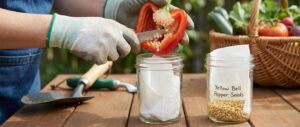
The process I use is very simple. I select the vegetables/herbs from which I am going to save seeds. If its a pepper, bell or hot, I simply take a piece of paper towel, label it correctly for the seed, cut open the pepper, select the best looking seeds (avoid small or dark colored ones) place them on the paper towel and leave it on the counter until the seeds dry. That can take up to 5 days, maybe shorter in your climate. Be generous with the seeds as they can be kept for at least 2 years, and you’ll have plenty of some don’t happen to germinate. This method can be used with bean, zucchini, cucumber, and pea seeds. For herbs, collect and dry the flowers as they contain the seeds. Tomatoes need an extra step. Remove the seeds from the tomato, placing the seeds in a mason jar with tap hot water. Put the lid on and shake the jar vigorously. After a few minutes, strain the tomato seeds from the jar. Place the strained seeds onto paper towel and pat then dry. Take a new piece of paper towel, label it then leave it on the counter to allow the seeds to dry. Once a day, pat the seeds to remove as much tomato material as possible. Repeat this for about 5 days, or until the seeds are clean and dry. It will be worth the effort!
To store your prepared seeds, simply take a ziplock and label it according to the seeds it will hold. Nothing fancy. That what I do with mine and I have not had an issue with seeds sprouting because of too much moisture, or going bad. This also keeps with trying to stay on a budget! If you have further questions, or need more clarification, please reach out to me!
Happy Gardening!
Pauline