Planting a home garden can be one of the most satisfying hobbies you can pick up. The true magic, though, happens when you match your veggie planting to what’s going on in the seasons. Figuring out exactly when to plant each vegetable isn’t always so clear; weather, your local region, and frost dates all play a big part. That’s why I’ve put together a home gardener’s seasonal vegetable planting calendar, so you can plan confidently and enjoy fresh harvests throughout the whole year.
Why Pay Attention to Seasonal Planting?
Seasonal planting may sound fancy, but it’s really just about timing your seeds or seedlings to give them the best shot at thriving. Following a planting calendar cuts down on hassle, prevents wasted seeds, and can give you much better yields. Different vegetables have different needs; some crave the chill, while others need heat before they’ll get going. Paying attention to your growing zone and those important frost dates helps ensure your plants will make it all the way to harvest.
Choosing the right season for each veggie also lets you dodge the big headaches—like bolting, pest attacks, or veggies that just refuse to grow properly. For example, growing cool weather lettuce when it’s blazing hot will only land you a bitter salad. Most U.S. gardeners can quickly find their local frost dates by checking online or asking a neighborhood nursery. Planning ahead means you get more food, deal with fewer problems, and your plot becomes much easier to handle.
Understanding Your Growing Zone and Frost Dates
Before you dig into those seed packets, check your USDA hardiness zone. This simple number is based on the average lowest winter temperature in your area and makes a big difference in what you can plant—and when. Zones range from 1 (coldest, way up north) to 13 (subtropical and toasty). You’ll see most seed packets and online resources refer to these zones for planting schedules. If you’re not sure about your zone, the USDA Plant Hardiness Zone Map is a great tool to use.
Also, pay close attention to your region’s first and last frost dates. The first frost is the average autumn day when temperatures dip low enough to damage tender plants, while the last frost marks the spring risk period’s end. Many planting calendars use these as anchor points. For instance, garden advice often says “sow three weeks before last frost.” Knowing these dates makes planning way simpler and more reliable.
Spring Vegetable Planting Calendar
Spring’s cool soil and gentle sunlight are ideal for most leafy greens and hardy veggies. Once the soil can be worked—a week or two before your last frost—you’re ready for these crops:
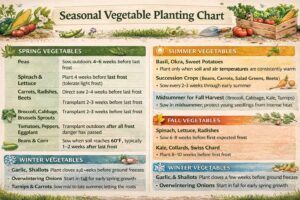
- Peas: Sow seeds outside 4 to 6 weeks before your last frost.
- Spinach & Lettuce: Plant 4 weeks before last frost; they even shrug off a mild chill.
- Carrots, Radishes, and Beets: Direct sow 2 to 4 weeks before last frost date.
- Broccoli, Cabbage, Brussels Sprouts: Transplant these about 2 to 3 weeks before last frost.
After your last frost date, the true heat lovers can join in:
- Tomatoes, Peppers, Eggplant: Move transplants outdoors only when frost is history.
- Beans & Corn: Sow when soil is at least 60°F, generally a week or two past last frost.
- Squash, Cucumbers, Melons: Transplant or sow outdoors after frost, once nighttime temps stay above 50°F.
Summer Vegetable Planting Calendar
Early summer is prime time for those heatseeking crops. With some careful planning, many can be staggered for longer harvests or even planted a second time for bonus veggies.
- Basil, Okra, Sweet Potatoes: Put seeds or slips in soil only after it’s nice and warm.
- Succession Crops: Beans, carrots, salad greens, and beets can be sown every 2–3 weeks through early summer for a steady supply.
- Midsummer Planting (for fall harvest): Broccoli, cabbage, kale, and turnips can be sown in midsummer for a fall crop, but shield seedlings as they get started, since summer sun can be intense.
Some folks like to tuck in pumpkins or winter squash in early summer too, so they’re fully grown as autumn rolls around. Keeping things watered and checking growth regularly during this time also steers your summer plantings in the right direction for the best harvests.
Fall Vegetable Planting Calendar
When summer wanes and the air starts to chill, it’s the perfect chance for round two of cool season crops. Many greens and root veggies take on even sweeter flavor after a touch of frost.
- Spinach, Lettuce, Radishes: Sow these in late summer, about 6–8 weeks ahead of the first expected frost.
- Kale, Collards, Swiss Chard: Give these a head start 8–10 weeks before frost for the tastiest, cold nipped leaves.
- Turnips & Carrots: Sow mid to late summer, letting the roots fill out as temperatures drop.
In fall, keeping the soil moist is extra important—cooler days don’t mean seedlings can go without water. Use row covers if frost shows up early, helping young plants get established for as long as possible.
Winter Vegetable Planting Calendar
In most regions, winter is best for planning and prepping, but with a bit of extra effort, you can still get a few things growing. If you live someplace relatively mild (zones 8-10), you might even have fresh salads all year.
- Garlic, Shallots: Plant cloves a couple weeks before your ground freezes—harvest them early next summer.
- Overwintering Onions: Start them in fall, so they get a spring jump.
- Kale, Spinach, Mâche (Corn Salad): Direct sow late summer or early fall to keep salads coming in winter—especially with row covers or in a simple greenhouse.
If you want tasty greens in January, a small cold frame or low tunnel can help keep things rolling. These mini-structures trap a bit of heat, stretching your growing season or just protecting fragile sprouts during those colder months.
Common Planting Calendar Pitfalls (and How to Dodge Them)
Even a solid plan can run into nature’s surprises. Here are several stumbling blocks—and how to sidestep them:
- Ignoring frost dates: Planting summer crops like tomatoes too early almost always ends in disappointment. Patience leads to bigger rewards!
- Neglecting to thin seedlings: Crowded carrots, beets, or greens lead to a sad, tiny harvest. Thinning gives the survivors the space they need to grow strong.
- Weed invasion: Early weeds steal light and nutrients from seedlings. I keep a hand fork handy to yank them—especially in the weeks right after planting.
- Bad spacing: Those seed packet guides exist for a reason. Crammed plants suffer and invite pests, so leave them room to breathe.
Advanced Calendar Tips for Better Harvests
Matching vegetables to their prime seasons is a great start. To get even more out of your garden, try these practical techniques:
Stagger your plantings: Planting in waves rather than all at once means steady picking—especially helpful with crops like lettuce or beans that mature quickly.
Put season extenders to work: Gear like row covers, cold frames, or even upcycled milk jugs let you keep planting in surprising weather or shield crops from frost. I find that floating row covers are a simple way to give a boost to young seedlings and keep things growing longer into the fall.
Experiment with companion planting: Growing quick crops near slow growers helps you maximize space. Plus, some companion pairs (think basil with tomatoes) naturally discourage common pests and promote healthy growth.
Record everything: Jot down what you plant, when you plant it, which beds did best, and lessons you picked up. Over time, your own notes will give you super detailed insight that beats generic calendars.
Vegetables to Grow Each Season – Quick Reference Table
A handy list for your garden planning—make sure to tweak these to fit your local weather and zone:
- Spring: Peas, spinach, lettuce, carrots, broccoli, radishes, beets
- Early Summer: Tomatoes, peppers, beans, corn, squash, cucumbers, melons
- Late Summer/Fall: Kale, chard, lettuce (second crop), turnips, carrots, broccoli, radishes
- Fall for Winter Harvest: Garlic, overwintering onions, spinach (with covers), mâche, Asian greens
Frequently Asked Questions
People often ask similar things when they start planning their vegetable gardens by season. Here are several common questions I get:
Question: What if I miss my local planting window?
Answer: Don’t stress. Many quick growing veggies, like radishes, greens, and spinach, can fill gaps in your garden, even if you’re running late. I like to toss these into any empty spaces for unexpected bonus harvests.
Question: Can I really garden in winter?
Answer: It all comes down to your zone, but with help from row covers, simple cold frames, or planting in containers, you can have fresh herbs and salads most of the year in milder areas.
Question: Are there tools to estimate best planting dates?
Answer: Absolutely. There are loads of online calendars and gardening apps; just put in your zip code and you’ll get tailored recommendations for what, when, and how to plant based on your local climate.
Wrapping Up
Keeping your planting calendar in order is one of the biggest steps to setting yourself up for gardening victory. By staying mindful of those all important frost dates, consulting reliable online tools, and tracking your personal experiences, you’ll get sharper as a gardener every single year. Turning seedlings into a steady stream of homegrown vegetables is its own reward—even when you hit a tricky patch along the way.
Here’s to fresh, flavorful homegrown veggies in every season—enjoy your gardening adventure!
Hi, Pauline, this was such a thorough and thoughtful guide. I could almost see the garden taking shape as I read it. The way you broke things down by season made it feel practical, not overwhelming, which is exactly what beginners need. I really liked how you added the frost date reminders; I’ve lost a few tomato seedlings to impatience before learning that lesson the hard way. But that’s life, anyway. We learn through our own mistakes, all the time.
In my garden, succession planting changed everything. Once I started sowing lettuce and beans in waves, I had fresh produce far longer than I used to. Your advice on recording results is gold too; my little notebook has become my best teacher. I have never thought of keeping those records before. But I’m no longer planting things by 2025.
Do you use a printed calendar, an app, or a notebook to track your planting schedule?
John
Thank you, John, for the positive feedback. I appreciate you taking the time to comment.
When I started gardening, my father took me under his wing and gave me a strong foundation to gardening. From there I have read books, searched online and had discussions with friends/family. I wanted to pass along what I have learned, and started writing down my experiences, my triumphs and failures and the advice I received that worked. Now here I am, using social media to help as many new and experienced gardeners, also asking for feedback to help improve skills. I have always used a notebook to log everything I do, but as of late, I have employed my daughter to help develop a “calendar”. I do hope to have that ready to post and make available to others who may wish to use it.
I am sorry to hear you will “no longer planting things by 2025”, but happy to hear you have had your own success in the past!
Thank you again and I hope you can take a look at a some of the other posts as well!
Hey — great article! I’m wondering one thing though: you mention using tools like row covers or cold frames for extending seasons, but what about soil temperature? Do you recommend testing the soil or waiting until it hits a certain degree before starting seeds or transplants in spring (beyond just “after last frost”)?
Hi Andrew, and great question.
Extending your gardening season with row covers or cold frames is a great idea — especially if you want to get a head start in spring or keep growing later into the fall. Both tools help protect your plants from cold weather and keep the soil warmer, which gives your garden a longer window for planting and harvesting.
While the “last frost date” is a good guideline, soil temperature is often a better indicator of when to start planting. Seeds and young transplants need warm soil to sprout and grow strong roots — if the soil is too cold, they’ll just sit there and struggle.
You can check soil temperature using a simple soil thermometer (available at most garden centers). Stick it about 2–3 inches into the soil in the morning for an accurate reading. Here’s a quick guide:
Cool-weather crops (like peas, spinach, lettuce, and radishes) can usually be planted once soil temps are 40–50°F (4–10°C).
Warm-weather crops (like tomatoes, peppers, and cucumbers) prefer soil temps around 60–70°F (16–21°C).
If you’re eager to start early, use row covers or cold frames to help warm the soil faster. A few sunny days under a cover can raise the soil temperature enough to get seeds germinating sooner.
I hope this answers your question!
Cheers, Pauline