
Growing fresh herbs at home brings flavor right to your kitchen, and it’s actually pretty straightforward to multiply your favorite plants without buying new ones. Propagating herbs from cuttings is a budgetfriendly way to keep your herb garden thriving. I’m going to share what I know, with easy-to-follow basics, handy tips, and a few things to watch for to help you succeed, even if you’re totally new to gardening.
Why Propagate Herbs From Cuttings?
If you’re a fan of fresh pesto, mojitos, or simply love having a kitchen windowsill that smells amazing, propagating herbs by cuttings is super useful. This method saves money because you get several new plants from one healthy herb, and you’ll often get mature, harvest-ready herbs sooner than if you start from seed. Some herbs, such as basil and mint, root especially fast, making it a rewarding project even for beginners.
This technique isn’t just for diehard gardeners. Even if you just enjoy the occasional sprig of rosemary with your roast potatoes, propagating from cuttings is practical and fun. Plus, you get to watch roots grow right from your kitchen window! Once you learn this trick, you might never buy expensive herb seedlings again. You’ll also discover new appreciation for the resilience of these plants as you watch roots develop right before your eyes. Cutting propagation also helps you keep certain herb varieties going throughout the year, especially annuals like basil that don’t survive winter outdoors in cooler climates.
Choosing the Right Herbs for Propagation
Not all herbs propagate the same way, and some root more easily than others. Soft stemmed herbs are usually the easiest to start with. Here’s a quick list of herbs I recommend trying first, especially if you’re still experimenting:
- Basil: Roots super quickly and makes great pesto in no time.
- Mint: Spreads easily, so you’ll have plenty to snip for teas and desserts.
- Oregano: Tough and forgiving, grows roots in water or soil.
- Rosemary: Takes a bit longer but worth the wait for its aroma.
- Sage: Needs a bit of patience, but once it roots, it gets bushy quickly.
- Thyme: A bit fiddly but still works with patience and care.
Herbs with woody stems, like rosemary and sage, might take a few weeks longer than soft stemmed types like basil or mint. If you’re looking for fast gratification, start with basil or mint. If you’re up for a bit of a project, give rosemary or sage a go. Even soft stemmed varieties can surprise you with their hardiness, especially if you make sure they have a warm environment. For herbs with tiny leaves or delicate stems like dill or cilantro, propagation from cuttings is tougher, so consider sticking to the most popular kitchen herbs when getting started.
How to Take and Prepare Cuttings
Taking good cuttings is really important for successful propagation. Choose a healthy, nonflowering stem; it should look green and vigorous, not woody or floppy. Use clean scissors or garden snips, and make your cut just below a leaf node (the spot where the leaf meets the stem). Here’s a quick step-by-step from my experience:
- Snip a 4-6 inch section of stem from your healthiest herb plant.
- Remove the lower leaves, leaving about 2-3 inches of bare stem at the bottom.
- If there are any flowers, pinch them off, since they can sap energy from rooting.
- Trim the base of the cutting so it’s just below a node. This is where roots form fastest.
I usually take cuttings in the morning, when plants are fully hydrated. It’s best to use a sharp, clean blade to avoid crushing the stem, and always wash your scissors first to keep diseases away. Pro tip: If you’re cutting from a supermarket bunch, check the freshness of the stems first and cut higher up if the bottoms look browning or squished. Longer cuttings tend to root better, but you’ll have the most success when you use stems that are already showing strong new growth near the tip.
Rooting Methods: Water vs. Soil
Now you’ve got your cuttings, you can root them in water or straight into soil. Both approaches work, and you might even want to try both to see which suits you (and your herbs) better. Each method has perks, and experimenting can help you figure out what works best for your indoor conditions.
Rooting in Water
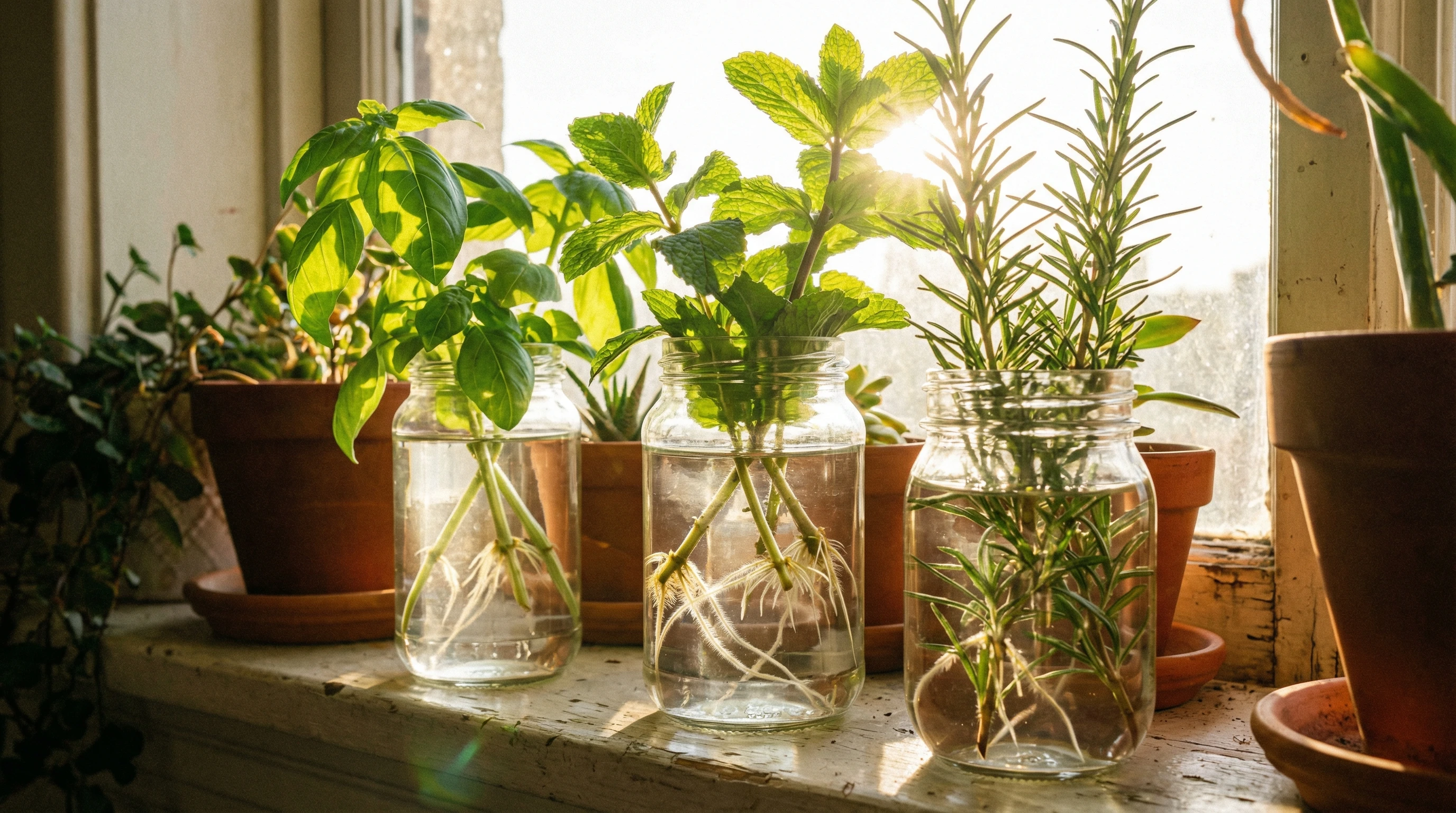
I find water propagation especially enjoyable because you can actually see the roots forming. Place your cuttings in a jar with a couple of inches of clean water. Make sure no leaves are submerged; they’ll rot if left in water.
Put the jar somewhere bright but not in direct sunlight. Change the water every two or three days to keep things fresh and prevent bacteria. In about a week (for basil) or up to three weeks (for rosemary), you’ll see roots forming. Once the roots are a few inches long, they’re ready to be potted up. If the water starts to smell or turns cloudy, rinse the stems and jar, and refill with fresh water. This keeps your new herb babies healthy. If roots look brownish or slimy, trim them back a bit and start over with clean water.
Rooting in Soil
Soil propagation is handy too, especially if you want a hands-off approach. Stick the prepared cutting into a small pot filled with moist potting soil, gently firming the soil around the stem. I cover my pots loosely with a clear plastic bag to create a mini greenhouse and keep humidity up, which helps cuttings root better.
Water the soil lightly to keep it just damp, not soggy. In two to four weeks, you’ll know roots have formed if you see new leaves growing or feel resistance when you give the cutting a gentle tug. Peat or coco coir mixed with perlite makes a great starter mix. Avoid heavy garden soil—it can stay wet too long for delicate new roots. Always make sure the plastic bag doesn’t touch the leaves and prop it up with sticks or chopsticks for airflow. If you spot any mold on the soil, let the cutting breathe a bit longer between misting’s.
Common Problems and How to Avoid Them
- Rotting Cuttings: This usually means too much water or submerged leaves. Always keep leaves above water and don’t let soil stay too wet.
- Slow or No Root Growth: Some herbs just take longer, but using fresh growth and keeping things warm (not hot) helps. If your kitchen is chilly, a sunny windowsill or a seedling heat mat can give a boost to rooting.
- Wilting: If your cuttings wilt, they may not have enough humidity. Mist them or cover them with a plastic bag, but don’t let the bag touch the leaves.
- Pest Issues: Occasionally, little bugs can appear on new cuttings. I rinse them off gently with cool water. Keeping your propagation area clean helps, too.
Patience is the name of the game, especially with woody herbs. Even if some cuttings don’t root, don’t stress. It happens to everyone, even seasoned growers. Giving your cuttings extra TLC by misting lightly and keeping them clean helps avoid most issues. Learning what works for you will come with time, so keep experimenting and tweak your process as you go along.
When and How to Pot Up Rooted Cuttings
As soon as your cuttings have roots that are about 2 inches long (usually in 1-4 weeks, depending on the herb), you can plant them in soil. I use a small pot with light, well-draining soil, and water gently after planting. Keep your new plants out of direct sun for a few days to let them settle in. After a week or so, move them to a brighter spot.
I like to pot up two or three cuttings together, so I get a fuller plant. Freshly rooted herbs are still pretty fragile, so a little TLC goes a long way at this stage. If you’re worried about transplant shock, water with a diluted solution of organic fertilizer to help roots settle faster. As the plants perk up and grow, you can snip the tops to encourage bushier growth, resulting in a lush herb display in your kitchen.
Handy Tips for Even Better Results
Here are a few tricks I’ve picked up that make propagating herbs from cuttings a lot easier:
- Use rooting hormone if you want to speed things up, especially with woody herbs like rosemary. Just dip the cut stem in powder before planting in soil.
- Label your jars or pots so you remember which herb is which, especially if you’re trying a bunch at once.
- Keep everything clean, from your scissors to your jars and pots. This helps prevent disease and rot.
- Don’t crowd your cuttings, give them space for better airflow and root development.
- Try different approaches and note what works. For example, if water propagation isn’t working for oregano, try rooting in soil instead. Sometimes, subtle differences in your kitchen’s microclimate affect results.
Experiment with different containers. Old spice jars, little glass bottles, or funky mugs make great rooting vessels, as long as they’re clean and let you see what’s going on with root growth. Upcycled containers are ecofriendly and can add personality to your windowsill garden. By mixing in some variety in your setup, you might stumble upon the method that works best for each herb you try.
Frequently Asked Questions
I often hear the same questions when sharing about propagating herbs. Here are a few common ones, answered directly from what I’ve learned:
Question: How long does it take for herb cuttings to root?
Answer: It depends on the herb and the method. Basil or mint can root in water in 7-10 days; rosemary and sage may take 2-4 weeks, sometimes a little longer. If you want to speed things up, a warm, humid spot works wonders. Don’t forget to change the water and check for rot.
Question: Do I need special lights or supplies?
Answer: Most herb cuttings will root just fine on a bright, indirect windowsill. You don’t need grow lights unless your house is super dark or the days are very short in winter. Simple tools like clean scissors, jars, and well-draining soil are all you need for success.
Question: Can I propagate herbs from grocery store bunches?
Answer: Sometimes! If the stems are fresh and not bruised, go for it. I’ve rooted basil and mint right from bunches I bought at the supermarket. It’s a great way to save a little cash and test what works for you, especially if you find an interesting variety not available as a plant.
Question: What if my cuttings wilt or mold?
Answer: Give them a fresh trim, try again with clean water or soil, and double-check for too much moisture or poor air flow. Success comes easier with practice, so keep at it. It can help to toss out any failing cuttings before they affect the others, and don’t worry if it takes a few tries to get it just right.
Starting Your Home Herb Garden With Cuttings
Propagating herbs from cuttings makes growing your own basil, mint, and other favorites way more affordable and fun. Every kitchen or sunny apartment can have homegrown herbs, and you don’t need a green thumb to get started. Once you get the hang of rooting and potting up, it’s pretty addicting, and you’ll probably end up sharing homegrown herbs with friends and family in no time. Exploring propagation means you’ll also be able to keep your favorite herb varieties going from season to season or even try new ones simply by trading cuttings with neighbors or fellow gardeners. Over time, this approach fills your kitchen or garden with lush, fresh flavors and helps you build gardening confidence. No matter your experience level, jumping into the world of herb cuttings is satisfying and yields plenty of rewards.
This guide is a game-changer for anyone wanting fresh herbs at home!
I love how you broke down both water and soil propagation makes it feel doable for beginners.
The tips about spacing cuttings and avoiding rot are super practical and easy to follow.
I’m excited to try rooting basil and mint from grocery store bunches it feels like a fun little experiment.
Watching roots grow on my windowsill sounds oddly satisfying, and I can’t wait to see the results!
Hi Monica, and thanks for the positive comment! It was a friend who had suggest I try rooting herbs that I had been growing all summer. I had not really thought about it too much, as I had been drying and freezing my herbs. Then the thought of having fresh herbs all year round was very appealing. I failed miserably the first few times I tried, but after asking others what they had done, I tried some different methods. Finally, I started to see success! It is oddly satisfying to see those little roots grow and even more gratifying watching the herbs continue to grow once potted. You mentioned using store bought herbs. I’d like to hear how that goes for you!
Happy gardening!
Pauline