
If you’ve kicked off the 30-day garden challenge, you’re now ready for Week 2. This stretch isn’t about dramatic changes overnight; it’s about small routines that make all the difference. Week 2 brings a lot of satisfaction, because you start really seeing signs of growth. Here’s what you can expect and some practical tips to stay on track.
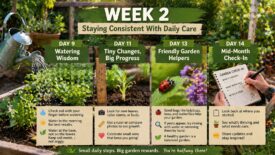
Staying Consistent With Daily Care
Maintaining momentum halfway through a monthlong garden challenge gets a bit easier when you notice early progress. I like to remind myself that healthy routines make gardening feel natural. Sticking to short daily checkins, maybe just 10–15 minutes, keeps things simple. Whether you’re checking for dry soil or brushing off leaves, these small tasks really add up.
- Morning Rounds: Before the day heats up, I do a quick round with my watering can. Mornings work best because plants use water more efficiently before heat evaporates it away.
- Soil Check: A finger in the dirt tells me more than any schedule. If the top inch feels dry, that’s my signal to water.
- Observation: Spotting tiny new leaves or flower buds is always a highlight. I sometimes snap phone photos for reference, which helps me notice the gradual changes.
Day 9: Watering Wisdom
I learned early on that not all garden plants want the same amount of water. Some, like tomatoes, love regular watering, while others, like lavender, prefer things a bit drier. What helps is watering directly at the base of each plant, not over the leaves, so the roots absorb all that moisture. If I miss a day, I don’t panic. Most plants bounce back pretty well, but a little consistency works wonders.
- Water in the Morning: This helps avoid fungal problems since foliage dries out as the sun comes up.
- Use Mulch: A thin layer of straw or bark chips keeps the soil moist longer and reduces watering needs.
Noticing Growth and Celebrating Small Wins
Plants might not double in size overnight, but tiny progress is there if you look closely. I’m a big fan of measuring the tallest seedling once a week with a ruler and comparing to earlier photos. Even small changes feel huge when you know where you started.
These are the moments that keep me motivated. New leaves, stronger stems, and that first sign of a flower bud always deserve a quick celebration. Being patient and observant pays off. If you’re gardening with family or friends, it’s always fun to compare notes and swap encouragement. Some gardeners have started digital photo albums or group chats to make sharing and cheering each other on easier, which helps keep motivation high.
Day 11: Tiny Changes, Big Progress
Most days in week two, the garden just needs steady attention. I like to make a habit of slowing down during my rounds. I look for different shades of green, notice any new shoots, and keep an eye out for any trouble spots, like chewed leaves or drooping plants. A weekly photo diary makes it easy to spot differences I might not notice otherwise. Even little changes bring a sense of achievement.
Try listening as well—sometimes quiet buzzing or chirping means that helpful pollinators or birds are in the area. Observing changes in sight and sound helps you get a feel for the whole garden mood.
Welcoming Helpful Insects and Managing Pests
As the plants mature, bugs start showing up more often. At first, I used to worry about every insect I found, but after a while I noticed that not all of them are troublemakers. Seeing bees or butterflies is a really good sign, since they help pollinate your plants. Ladybugs, too, help control harmful pests.
If you spot holes in your leaves, it helps to look closely before reaching for any sprays. Most of the time, gently knocking bugs off or hosing down plants does the trick. I try not to get too stressed about the occasional nibbled leaf; plants are pretty resilient! If you’re interested, you can even check out online guides to help spot which insects are garden allies and which are pests, making it easier to choose nonchemical solutions.
Day 13: Friendly Garden Helpers
This is the time when the natural world really joins your challenge. Ladybugs munch on aphids, while bees zip around collecting nectar and pollinating flowers. Butterflies, besides being great to watch, play a role in helping the garden thrive. If I do spot a problem like a bunch of tiny bugs on the underside of leaves, my first move is often just rinsing the plant with water or picking off the bugs with gloved hands. Most issues clear up fast with a light touch. Sometimes, leaving small piles of rocks or shallow water dishes can invite more helpful insects into the space.
Tracking Progress and Adjusting Your Approach
Halfway through the challenge, checking your progress can be really rewarding. I like to walk around the garden with my original seed packets or plant tags in hand, taking notes on which crops look strong and which might need a little more help. Adjusting watering schedules or moving pots to sunnier spots can make a real difference in the next weeks.
Sometimes things don’t go how you expect. Maybe lettuce is yellowing or beans haven’t sprouted. It’s totally normal. I find that small tweaks; adding compost, loosening compacted soil, or giving weak plants a little liquid fertilizer; help set things right. For bigger issues, online gardening forums are a great place to ask experienced growers for their tips and solutions.
Day 14: Mid-Month Check-In
Making it to day 14 means you’re officially halfway! I always pause for a “garden check-up” and, if I’m sharing the challenge with friends, swap photos or updates. Looking back at day-one snapshots gives me a bigger sense of progress than day-to-day glances. Some plants may lag behind, but noticing and helping them now sets you up for an even better finish by day 30. Celebrating with a small treat or sharing your progress with others can add an extra spark to your routine.
Common Week 2 Questions
Curiosity and occasional worries go hand in hand with this stage of gardening. Here are a few questions I get or hear often:
Q: How do I know if I’m overwatering or underwatering?
A: Poke your finger into the soil. If it’s soggy or smells musty, you’re likely watering too much. If the soil is bone dry an inch down, try watering more often. Adjusting based on weather also helps.
Q: My seedlings look leggy. What should I do?
A: Leggy plants usually need more sunlight. Moving them to a brighter spot can help them grow stronger and less spindly over time.
Q: How do I deal with pests without chemicals?
A: Try removing pests by hand or with a gentle water rinse. Attracting ladybugs or planting flowers like marigolds nearby can make a difference too.
Extra Tips for a Productive Week 2
Getting creative with your garden routine can give a boost to your results and keep things enjoyable.
- Label Your Plants: If you’re growing a lot of varieties, plant tags or even painted rocks help keep everything organized.
- Keep a Journal: Jotting down what you notice (and how you fix things) is super helpful, both for finishing this challenge and making the next one smoother. Try sketching plant growth or gluing in printed photos for a more memorable journal.
- Pace Yourself: Don’t feel you need to solve every issue instantly. Plants do a lot of fixing themselves if you give them consistent care. Taking time to enjoy the process, rather than rushing through, makes every moment in the garden more rewarding.
Why Observation Matters
One of the coolest things about week two is seeing that close attention pays off. I’ve found that just stopping to look for a few minutes each day helps me spot small issues before they get serious and lets me really enjoy those first growth spurts. Gardening’s not all about the outcome; every little victory is worth enjoying!
Staying curious and a bit patient during week two keeps the adventure fun and the plants healthy. Keep snapping those progress pics, tweaking your routine as needed, and enjoy the process as your garden starts really coming alive. Embracing daily observations doesn’t just help your plants, it means you get to spot every hint of growth and celebrate each one on your way to a thriving garden.
I love how Week 2 shifts the focus from planning to the tangible excitement of getting hands in the dirt. As a veteran’s daughter, I appreciate the “mission-ready” approach you take to organizing your planting rows for maximum yield. It’s inspiring to see a community-driven challenge that makes sustainable gardening feel both disciplined and accessible.
Hello Leah! I am pleased you like the shift in Week 2! This is truly the time to get in and get your hands dirty. It’s really important that there is planning that goes into planting, so that is room for successive planting and ensuring you don’t put plants together that “don’t get along”. I hope that many gardeners take part in this challenge. I plan on other challenges as the season goes on.
Watch out for Week 3!
Happy Gardening!
Pauline