Indoor herb gardening is pretty handy if you like the idea of fresh flavor within arm’s reach. You don’t need acres of land or even a complicated setup. If you’ve ever wanted to snip fresh basil for your pasta, or mint for your tea, growing herbs indoors is worth checking out. Below, I’ll walk you through all the basics to get you started with a thriving indoor herb garden.
Why Grow Herbs Indoors?
Indoor herb gardening comes in clutch for a bunch of reasons. First off, it brings fresh ingredients straight to your kitchen regardless of the season. You also get that burst of green indoors, which is honestly pretty nice for your space and mood.
Herb gardens don’t take up much room, so even apartments, studios, or small homes can benefit. As long as you have a sunny window or a good grow light, you’re set. Herbs like basil, parsley, cilantro, mint, and chives do well inside, but there are plenty of others worth trying.
If you love cooking with flavor-packed ingredients, indoor herb gardening is a fantastic way to keep your supply fresh. Plus, tending to green plants indoors helps reduce stress and makes your place look extra cozy during the colder months. It’s almost like bringing a piece of the outdoors into your daily routine.
What You Need To Get Started
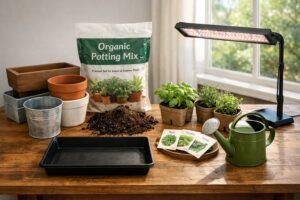
Getting set up isn’t complicated, but having the right tools makes a big difference. Here are the basics I always use or recommend:
- Containers: Go for pots with drainage holes. You can use clay, ceramic, or recycled containers, as long as excess water has somewhere to go.
- Quality potting mix: Regular garden soil gets dense indoors. A light potting mix made for herbs or vegetables works best.
- Seeds or starter plants: Seeds give you more variety, but young plants offer a head start if you want herbs right away.
- Good light: A south or southwest-facing window is perfect. Otherwise, a full-spectrum LED grow light works for darker rooms.
- Watering can and tray: It’s way easier to water accurately with a small can. Trays keep drips off your counters.
That’s enough to get most basic herbs rolling. If you want to geek out a bit, humidity trays, mini greenhouses, or even hydroponic kits are cool add-ons worth exploring later on.
A small spray bottle is also handy for keeping the air around your herbs moist, especially in winter when heaters dry things out. Consider placing a small fan nearby to encourage air movement, which helps prevent mold and keeps your herbs healthier.
How to Start an Indoor Herb Garden: Step-by-Step
Whether you’re growing from seed or picking up starter herbs at the garden center, here’s my go-to routine for setting up a kitchen windowsill garden:
- Pick your spot: Choose the brightest location you have. A windowsill that gets at least 6 hours of direct sun is best, but adjustable grow lights fill the gap if your place stays shaded.
- Fill containers: Scoop potting mix into your chosen pots, leaving a bit of room at the top for watering.
- Plant seeds or seedlings: For seeds, follow the instructions on the packet. Don’t bury tiny seeds too deep, since most only need a light dusting of soil. For seedlings, tuck them in just deep enough to cover the roots.
- Water gently: Water until you see a few drops come out the bottom drainage holes. Keep the soil evenly moist (not soggy!) at first.
- Set in the light: Place the pots in your chosen spot. If using a grow light, 12-14 hours per day works for most culinary herbs.
- Label your herbs: Especially if you’re growing more than two or three kinds, labels make it easy to remember what’s what.
Keeping an eye out for the first green shoots is always exciting. Sprouts will show up in days to a couple of weeks depending on the herb.
Some folks like to start with herb growing kits that bundle everything you need. They take out the guesswork, and often include step-by-step instructions, seed varieties, and even plant food to give your new garden a boost.
Common Beginner Challenges (And Fixes)
Everyone runs into a few hiccups here. These are the ones I see popping up the most:
- Too little light: Leggy, pale herbs are usually craving more sun. Try moving pots closer to the window or swapping in a brighter grow light.
- Overwatering or underwatering: Herbs hate soggy roots, but bone-dry soil isn’t much better. Damp, but not soaked, is usually the sweet spot. Sticking your finger in the soil up to the first knuckle is an old-school way to check moisture.
- Pests: Aphids or tiny flies sometimes sneak in. Wiping leaves gently, rinsing with water, or using a bit of insecticidal soap is usually enough to clear things up.
- Stunted growth: Herbs that don’t seem to grow might need a touch of liquid fertilizer, or maybe just more space to spread their roots. I like to repot anything that outgrows its container.
Spotlight on Watering
Watering is what trips most people up in the beginning. Indoor environments usually mean less evaporation than outside, so herb roots can stay wet too long if you’re not careful.
Using pots with good drainage and a saucer underneath is a game changer. Water only when the top inch of soil feels dry. Depending on your humidity and herb variety, that could be every couple of days or just once a week. If the air gets dry, misting the leaves lightly can help keep your plants perky.
Getting Enough Light Indoors
Natural sunlight is the best, but not everyone gets perfect conditions. Grow lights are super helpful for apartments or north-facing windows. Full-spectrum LEDs support growth just like regular sunlight, and don’t use much electricity. Timers take the guesswork out of remembering to switch them on and off, helping your herbs get a steady light schedule.
For the best results, rotate your herb pots every few days. This gives every side equal exposure, so plants grow nice and even instead of reaching sideways for the light.
Dealing With Pests and Diseases
Most herbs are pretty sturdy, but bugs like aphids, spider mites, and fungus gnats sometimes sneak in. Take a close look at your plants every week. Rinsing leaves under the tap or dabbing with soapy water knocks off most pests. If things get out of hand, moving affected pots away from healthy ones helps prevent spread.
To stop mold or mildew from forming, keep the area around your pots well-ventilated. Remove any dead or yellowing leaves right away and try not to let water splash onto leaves when watering. Healthy plants are less likely to have big pest issues in the first place.
Tips for Harvesting and Using Your Herbs
Trimming and using herbs actually helps them grow bushier. When you’re ready to start snipping, always use clean, sharp kitchen scissors. Never take more than one-third of the plant at once, since leaving enough for regrowth means you’ll have herbs for months.
Soft-stemmed varieties like basil, cilantro, and parsley bounce back fastest. Woody herbs (think rosemary or thyme) need a bit more time between harvests, but even a handful can add a ton of flavor.
Got leftovers? Wrap leafy herbs in a damp paper towel, seal in a bag, and pop in the fridge. Or dry them by hanging upside down in small bunches away from direct sun for future use. If you grow extra, you can also freeze chopped herbs in ice cube trays with a bit of water or olive oil to use later in soups or sauces.
Best Herbs To Grow Indoors
Some herbs really thrive indoors. My favorites that are easy for beginners:
- Basil: Loves warmth and sun. Perfect for pesto, salads, or pizza.
- Chives: Hardy, quick to regrow, and add a mild onion flavor to eggs or baked potatoes.
- Mint: Spreads fast, so better in its own pot. Awesome for teas, cocktails, or desserts.
- Parsley: Slow to start from seed but super useful in tons of savory dishes.
- Thyme: Takes a bit to get established but grows steadily with a bit of sun.
- Cilantro: Prefers cooler temps and bright light. Great for salsas and curries.
You can experiment with dill, oregano, sage, or even microgreens once you get the hang of it. Each herb brings unique flavors, so try a mix to add variety to your cooking. Microgreens, while not true herbs, grow quickly indoors and provide concentrated nutrition—an easy way to boost salads or sandwiches.
Frequently Asked Questions
I get all kinds of questions about indoor herb gardening, especially from folks just testing the waters. Here are some of the main ones:
How much sunlight do indoor herbs need?
Most need at least 6 hours each day. Some can manage with less if you use a grow light, but brighter is usually better for flavor and growth.
What’s the best container for herbs?
Any pot with a drainage hole works, but I find clay pots help keep roots from staying too wet. Plastic holds moisture longer, which is handy for drier homes.
Do I need to fertilize indoor herbs?
Most herbs don’t need a lot of feeding. If growth seems slow after a couple months, a diluted all-purpose liquid fertilizer every few weeks is usually enough.
Are there herbs that just won’t grow indoors?
Some, like dill, fennel, or large bay laurel trees, can be tricky indoors because they get tall or need specific conditions. Stick with basil, chives, mint, and parsley at first for better luck.
Wrapping up the Indoor Herb Garden Adventure
Growing herbs indoors means fresher meals, greener spaces, and a bit of gardening no matter where you live or what the weather outside looks like. You don’t need a green thumb or a massive setup. Just pick a sunny corner, practice a little patience, and keep up with a simple care routine. Your kitchen will thank you every time you reach for fresh basil or mint grown by your own hands, and you’ll enjoy an indoor space that feels extra lively every day.
Back to Starting An Indoor Herb Garden.
As a disabled single mom running my own business, an indoor herb garden is the perfect way for me to bring a bit of nature inside without the physical strain of heavy outdoor yard work. I love that I can grow fresh ingredients for our meals right from my kitchen counter, which saves me time on grocery runs and fits perfectly into my busy “mompreneur” schedule. This guide makes it feel so achievable to create a little healing green space that both my kids and my business-weary mind can enjoy!
Hi Leah, and thanks for the positive comment. My goal here at Green Thumbed Home Gardening is to try and remove barriers in the world of gardening. Long gone are the days when you can only grow outside, and gardening was physically demanding work. I am pleased that my guide to growing an indoor herb garden is an inspiration to you. It is something I do all the time as I love using fresh herbs whenever I can. I would love to hear about your successful venture with your indoor herb garden!
Happy Gardening!
Pauline