
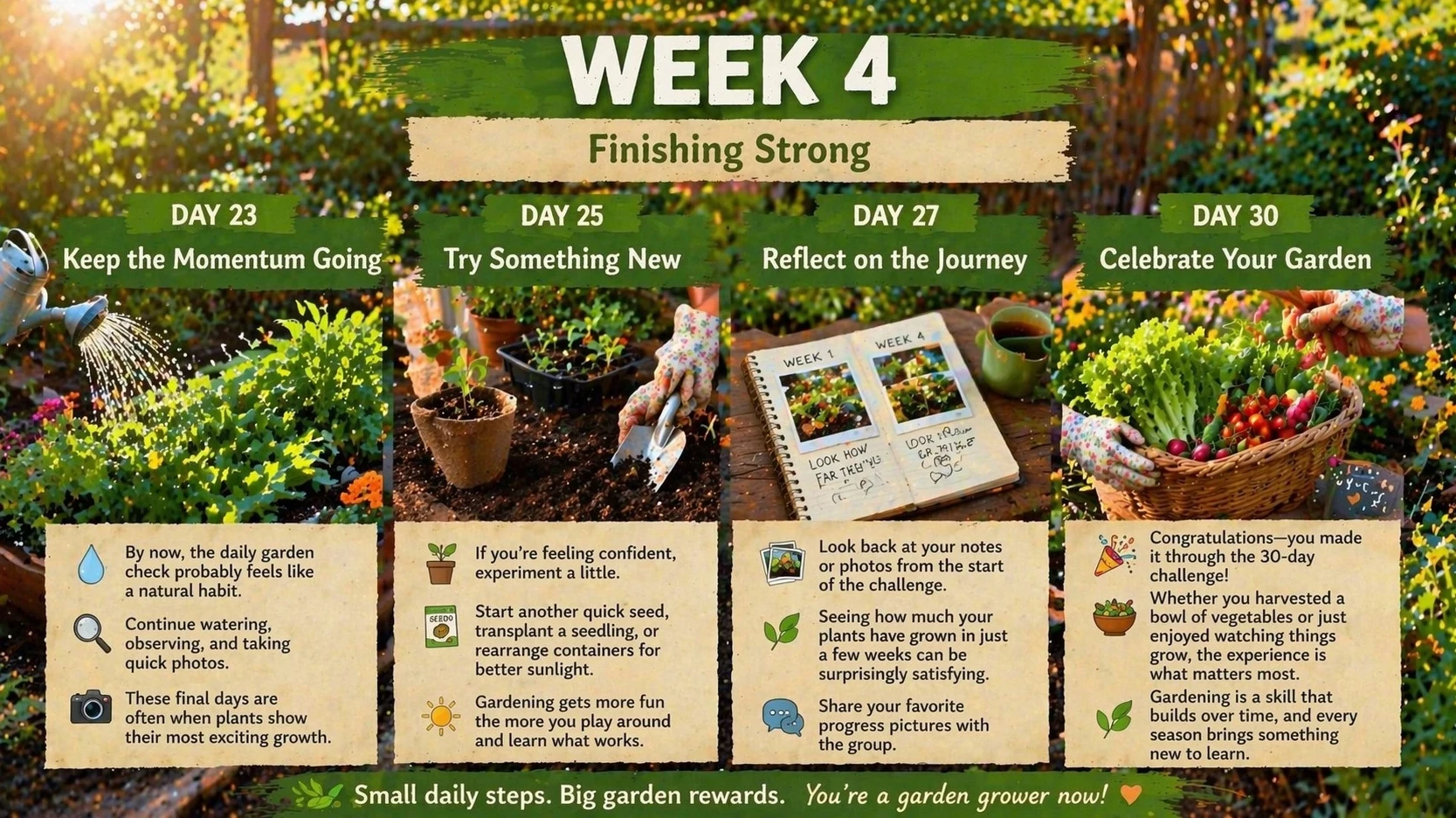
Week 4 of the 30 Day Garden Challenge is here, and honestly, it feels both exciting and a little bittersweet. You’re at the finish line, just a handful of days away from saying you completed something pretty cool for both yourself and your green space. This week is all about keeping up those good routines, trying new things, reflecting on how far you’ve come, and celebrating every tiny green milestone.
Keeping Habits Strong (Days 23–26)
If you’ve stuck with the daily watering and garden checks, those actions probably feel like second nature by now. This “autopilot” part of gardening actually works in your favor. Checking on your plants each day keeps you tuned in to small changes and lets you catch issues before they get serious. At this stage, I notice my plants start to reward me with bigger leaves, more blooms, or the first signs of fruit. It’s honestly satisfying.
I like to keep my watering consistent, usually in the morning before the sun gets harsh. Soil tends to dry out quicker in late spring, so I feel the surface before grabbing the watering can. Looking under leaves for pests and checking that stems are sturdy has become part of my routine. If something looks off, like a yellowing leaf or a new bug, snapping a quick photo helps me research solutions later on.
Taking “progress pics” each day totally pays off. When I scroll back, those photos are proof that even slowgrowing veggies or herbs are thriving. Sticking with this rhythm sets you up for long-term success, not just these 30 days. Plus, flipping through these photos can spark motivation during those mornings when part of you wants to skip the garden for an extra cup of coffee.
Another habit I’ve found useful is doing a quick once-over at the end of the day if I’ve pruned, watered, or otherwise messed with the layout. This is the moment small things—like a drooping seedling or extra dry pot—stand out, and it feels good to finish the evening knowing you’ve set up your plants for another solid day ahead.
Adding Variety and Experimenting (Day 25)
Once you’re feeling good about your regular care routine, it’s honestly pretty motivating to try something new. I use Week 4 as permission to experiment. If I started lettuce seeds earlier in the month, I’ll drop in a couple radish seeds now since they’re so quick to sprout. Moving a container to test out a sunnier spot or even trying a quick soil mulch with dried leaves gets me curious about the results.
If you’ve been nervous about transplanting, this is a good day to give it a go. Carefully scoop up a seedling and move it to a slightly bigger pot or open space in your garden bed. I love seeing how even small changes like rearranging pots can give a boost to growth; sometimes a shadier spot helps wilting basil, or tomatoes pick up speed in brighter corners.
Jot down your experiments in your notes app or garden journal. It’s pretty handy to remember which tweaks improved your results and which just looked good in theory.
You can also mix in some variety by switching up your watering method or using natural mulches. Even tossing some kitchen scraps in a contained composting bin gets you thinking about how every input affects plant growth. Each little change is a good chance to learn, and small experiments often lead to bigger confidence.
Reflection and Looking Back (Day 27)
Sooner or later, every gardener hits a point where patience gets tested, especially if seeds take ages to sprout, or a storm messes up young plants. I always find it motivating to flip through notes or photo logs near the end of a challenge. Seeing how much the garden changed in four short weeks really lifts my spirits. There’s usually way more progress than I remembered!
Think about any wins: Did you spot your first flower? Did a new type of herb survive your beginner tendency to overwater? Count those as achievements. Reflect on what surprised you and what you found more challenging than expected. If you’ve joined an online group or messaging thread, share a few before-and-after shots; you’ll probably get some encouragement or advice you didn’t expect.
Noticing growth, no matter how tiny, is really important for building confidence. I always remind myself that every garden looks a bit rough in the beginning but gets more rewarding the longer I stick with it.
If you’re feeling stuck on progress, try looking even closer: count how many new leaves there are this week compared to last, or spot the new roots pushing through soil in a transparent cup. Sometimes, the smallest signs of life are the ones that matter most, and recognizing them can spark gratitude for sticking with your daily habits.
Celebrating Your Garden’s Progress (Day 30)
Crossing the finish line of a monthlong garden challenge feels awesome, whether you filled a bowl with homegrown greens, or just managed to keep a few seedlings alive. The adventure is really what matters most; every day you spent caring for plants, you built up gardening skills and created simple moments of calm in your routine. That’s worth celebrating!
I like to take a final set of photos or do a mini “garden harvest” of whatever’s ready. Maybe it’s only a handful of herbs or a radish or two—it still counts. If you tried new methods, like natural pest control or companion planting, give yourself a pat on the back for stretching your comfort zone. Sharing what you learned or posting a garden progress video inspires others and reminds you how much you learned, even if everything didn’t go perfectly.
You can even take this opportunity to look ahead and dream up what next month’s garden might hold. Set small, fun goals based on what worked and what didn’t, and keep the energy rolling as you plan out your next season’s adventure. Whether you’re starting a new flower patch, testing tomatoes, or just practicing patience, celebrate every achievement, big or small.
Common Garden Challenge Questions
After doing this challenge more than once, I come across similar questions from friends and neighbors. Here are a few answers from my own experience:
Q: What if some of my seeds never sprouted?
A: That’s honestly super normal, especially with storebought seed packs. I usually try reseeding after the first week if I notice bare spots. Sometimes it’s just bad luck or old seeds. Make notes which brands or varieties worked best for you, and buying a fresher batch next time helps.
Q: My seedlings look spindly and weak. How can I fix this?
A: Leggy seedlings usually want more light. Try moving them closer to a window or under a grow light if you have one. Also, avoid overwatering, and brush your hand gently over the seedlings each day to help them grow sturdier stems. Pinching back overgrown tips can sometimes encourage bushier growth too.
Q: Is it too late to fix pest problems in the last week?
A: It’s definitely not too late to catch and help plants recover. Check daily for bugs under leaves or sticky residue. Remove pests by hand if possible; for tiny bugs like aphids, a spray of diluted dish soap works pretty well. Some pests can’t be stopped overnight, but proactive steps now can help salvage your hard work.
Q: What can I plant now for a quick win before the challenge ends?
A: I go for speedy growers like radishes or microgreens; they sprout fast and will show progress in just a few days. Even if you plant them at the end, watching fast changes keeps you motivated beyond the challenge.
Practical Tips for Next Time
With one garden challenge under your belt, it’s easy to tweak things for your next round. Here are some practical things I always keep in mind:
- Stagger planting: Start a few seeds every week, so you don’t get everything maturing at once. This keeps the garden productive longer and prevents overwhelm at harvest time.
- Upgrade your setup: Even a secondhand grow light or recycled pots make a huge difference if you want an indoor garden or live in a cloudy region. Having the right tools on hand helps you react to weather and environment changes quickly.
- Try compost tea or organic fertilizer: Plants in containers especially love a midmonth nutrient boost. Your growth picks up noticeably after a dose, and this is a good way to see the difference nutrition can make.
- Keep connecting with other gardeners: Online forums and social media groups dish out a ton of “why didn’t I think of that?” ideas and keep the habit rolling year-round. Swapping photos or even troubleshooting plant issues together makes gardening more fun and keeps you learning.
The confidence and knowledge you gain in this last week of the challenge doesn’t just fade; they’re the foundation for season after season of successful gardening.
Don’t hesitate to try new plants, new methods, and different arrangements for your next round. You’ll be surprised how much you remember from these thirty days, even a year from now. The beauty of gardening is that every season brings something new and every mistake teaches a lesson for better growth next time.
Final Thoughts: Garden Skills That Last
Finishing off the 30 Day Garden Challenge has taught me that it’s really about more than just growing veggies or flowers. It’s about showing up every day, not being afraid to try new ideas, learning from what doesn’t work, and enjoying the calm routine of caring for something living. Even setbacks teach useful lessons for your next attempt.
So whether your garden looks like a jungle or you just coaxed a single basil plant from seed, give yourself some credit. Every day spent outside among plants brings a little more peace and joy into your life, and that’s always time well spent. Gardening might start as a monthlong challenge, but what you take away lasts for years to come.